Lion's Mane and ADHD: What the Research Actually Shows
People ask whether lion's mane helps with ADHD more than almost any other question we get. The honest answer starts with a number: zero. Here is every relevant study, what it found, and what that means if you are thinking of trying it.
By The Lion's Mane Reviews Desk · 9 min · Updated 2026-08-23
Short answer: there is no human clinical trial of lion's mane in people with ADHD. As of our PubMed search on August 23, 2026, the only paper that puts Hericium erinaceus and ADHD in the same title is a 2025 computational and cell-culture study, which modeled how compounds in a lion's mane extract might bind to a protein target and did not test a single person. Everything else people cite comes from trials in other groups: older adults with mild cognitive impairment, healthy young adults, and older Japanese volunteers, none of whom were selected for ADHD.
That does not make lion's mane useless to think about. The attention and cognition trials are real, small, and cautiously encouraging, and the mushroom is generally well tolerated. It does mean that anyone telling you lion's mane treats ADHD, or works like a stimulant, or can replace medication, is ahead of the evidence. Lion's mane is a dietary supplement, not an ADHD treatment, and nothing here should change a medication decision without a clinician.
Below: the one ADHD-specific paper, the human cognition trials and exactly what they measured, the NGF mechanism and why it is still preclinical, what a reasonable trial of it looks like, and where the honest product picks live.
The short version
- Zero human ADHD trials of lion's mane exist as of August 23, 2026 (PubMed).
- The only ADHD-titled paper, Mohan et al. 2025, is computational and cell-culture work proposing a serotonin-transporter target; no participants.
- The human cognition trials were in older adults with mild cognitive impairment (Mori 2009, n=30; Saitsu 2019, n=31) and healthy young adults (Docherty 2023, n=41); none recruited for ADHD.
- The NGF mechanism behind the interest (Mori 2008; Lai 2013) is cell and animal research, not a proven human outcome.
- Lion's mane is not a stimulant, does not act within hours, and is not a substitute for ADHD medication; do not stop or change a prescription without a clinician.
- If you try it anyway: a stated fruiting-body extract, daily for 4 to 8 weeks, with a real before-and-after measure, and tell your prescriber.
| Study | Who was studied | What it found | ADHD relevance |
|---|---|---|---|
| Mohan et al. 2025 (ACS Omega) | No people; cell culture + computer modeling | Proposed myo-inositol in lion's mane extract as a binder of SLC6A4 (serotonin transporter) | ADHD-titled, but hypothesis-generating only |
| Mori et al. 2009 (Phytother Res) | 30 adults aged 50 to 80 with mild cognitive impairment | Higher cognitive-scale scores vs placebo at 16 weeks on 3 g/day powder; gains faded after stopping | Cognition in older adults, not attention disorder |
| Saitsu et al. 2019 (Biomed Res) | 31 adults over 50 | Improved scores on one cognitive test at 12 weeks on 3.2 g/day | Cognition in older adults |
| Docherty et al. 2023 (Nutrients) | 41 healthy adults aged 18 to 45 | Faster performance on one attention task after a single 1.8 g dose; trend toward lower subjective stress at 28 days; authors call for larger trials | Closest to the question; still not ADHD |
| La Monica et al. 2023 (Nutrients) | Healthy adults, crossover | Acute cognitive measures after a single 1 g extract dose, combined with guayusa tea in one arm | Acute, healthy, not ADHD |
| Mori et al. 2008 (Biol Pharm Bull); Lai et al. 2013 | Cells and mice | Lion's mane extract induced NGF expression in cell lines and mouse hippocampus | Mechanism only, preclinical |
Every study people cite for lion's mane and ADHD, and who was actually in it.
The one ADHD-specific study, and what it is not
Mohan and colleagues' 2025 paper in ACS Omega is the only published study that names lion's mane and ADHD together, and it contains no human participants. The team made a hot-water extract of Hericium erinaceus, confirmed it was not toxic to a human neuroblastoma cell line, catalogued its chemical constituents, and then used computer modeling to ask which of those constituents might bind to proteins linked to ADHD. Their network analysis pointed to SLC6A4, the serotonin transporter, and their docking simulations suggested myo-inositol from the extract binds it reasonably well.
That is legitimate early-stage science and it is exactly the kind of work that precedes an animal study, which precedes a human trial. It is not evidence that lion's mane does anything for a person with ADHD. Myo-inositol is also found in many foods; the paper does not establish that an oral dose of lion's mane delivers enough of it to the brain to matter, because it did not try to.
The human trials: real, small, and not about ADHD
Three human trials are the basis for almost every cognitive claim about lion's mane, and none of them recruited people with ADHD.
Mori's 2009 double-blind trial gave 30 Japanese adults aged 50 to 80 with mild cognitive impairment 3 grams a day of fruiting-body powder for 16 weeks. The lion's mane group scored higher than placebo on a cognitive rating scale at weeks 8, 12, and 16, and the advantage faded in the four weeks after they stopped. Saitsu's 2019 trial gave 31 adults over 50 about 3.2 grams a day for 12 weeks and reported improvement on one cognitive test. These are the trials that made lion's mane a cognition supplement, and they are about older adults with measurable decline.
Docherty's 2023 pilot is the closest thing to the question people are asking. Forty-one healthy adults aged 18 to 45 took 1.8 grams a day of a lion's mane product or placebo for 28 days. A single dose was associated with faster performance on one attention task (a Stroop task) about an hour later, and 28 days of use showed a trend toward lower subjective stress. The authors described the results as preliminary and called for larger studies. It was not an ADHD population, the attention finding came from one task on one day, and a trend is not a significant result.
The NGF mechanism, and why it is still preclinical
The reason lion's mane attracts attention-related hopes is nerve growth factor. In cells and mice, lion's mane extract increases NGF expression. In humans, this has not been shown to translate into anything.
Mori's 2008 paper found that an ethanol extract of lion's mane raised NGF gene expression in a human astrocytoma cell line and in the hippocampus of mice fed 5% lion's mane powder for a week, and that the effect ran through the JNK signaling pathway; notably, the isolated hericenones C, D, and E did not do it on their own. Lai's 2013 work showed a water extract promoted neurite outgrowth in a neuroblastoma-glioma cell line and boosted the effect of added NGF. Friedman's 2015 review in the Journal of Agricultural and Food Chemistry collects the wider literature on erinacines and hericenones.
This is mechanism research. It tells you why scientists are interested. It does not tell you that an oral capsule changes NGF in a human brain, because no trial has measured that, and it says nothing about the dopamine and norepinephrine systems that ADHD medications act on. Lion's mane is not a stimulant and does not work the way those drugs do.
What this means if you have ADHD and want to try it
Lion's mane is not an ADHD treatment. It may be a reasonable, low-risk thing to try alongside whatever your clinician has you doing, provided you treat it as an experiment and not a replacement.
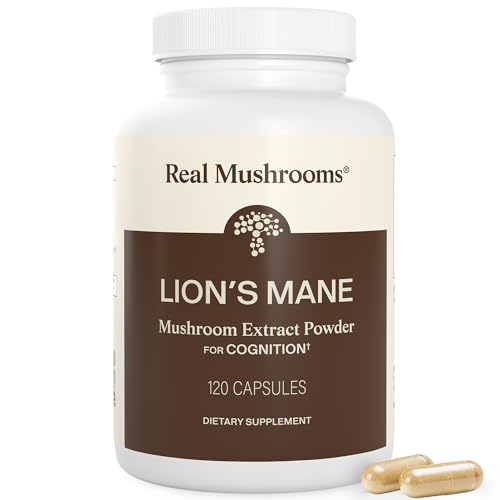
Three rules. First, do not stop, reduce, or skip prescribed medication to try a mushroom; tell your prescriber you are adding it, especially if you are on anything that affects serotonin, given the 2025 paper's proposed target. Second, use a product you can verify: a fruiting-body extract with a stated beta-glucan percentage, such as Real Mushrooms' capsules, rather than an undisclosed mycelium blend, so that if nothing happens you at least know the product was real. Third, give it the timeframe the trials used, 4 to 16 weeks of daily use, and pick one concrete measure in advance, such as a task-completion log, so you are not grading it on vibes.
Where the product picks live
This page is the evidence. Our best lion's mane for ADHD guide is the shopping list, built on the same rules: verified fruiting-body extracts with stated beta-glucans, honest framing, no miracle language.
Related reading: lion's mane vs Adderall for why the comparison itself is a category error, lion's mane for focus and memory for the cognition evidence in full, the dosage guide for the study amounts, and does lion's mane work for the wider honest picture.
Key terms
- Nerve growth factor (NGF)
- A protein that supports the growth and survival of certain neurons. Lion's mane extract raises its expression in cells and mice; no human trial has shown the same.
- SLC6A4
- The gene for the serotonin transporter, proposed as a target of lion's mane constituents in the 2025 computational study. A hypothesis, not a demonstrated effect.
- Mild cognitive impairment (MCI)
- Measurable cognitive decline in older adults that falls short of dementia. The population in the 2009 and 2019 lion's mane trials; not ADHD.
- Pilot study
- A small preliminary trial designed to test feasibility and generate hypotheses, not to prove an effect. Docherty 2023 is a pilot.
- Preclinical
- Research in cells or animals that has not been tested in humans. All of the lion's mane NGF evidence is preclinical.
Our top-rated lion's mane
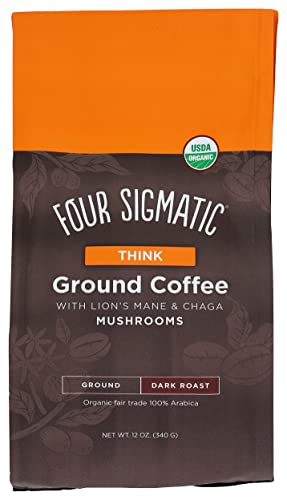
Whatever you decide, these are the lion's mane picks our reviews keep ranking on top. Live price check on each.



As an Amazon Associate we may earn from qualifying purchases, at no cost to you. 21+.
Questions, answered
Does lion's mane help with ADHD?
There is no evidence that it does, because no human trial has tested lion's mane in people with ADHD. The only ADHD-titled paper, published in 2025, is computer modeling and cell-culture work with no participants. Small trials in older adults and healthy young adults have shown modest cognitive signals, which is not the same thing.
Is there a lion's mane ADHD study?
One, and it did not involve people: Mohan and colleagues, ACS Omega, 2025, which proposed that myo-inositol in a lion's mane extract might bind the serotonin transporter based on computer docking. It is hypothesis-generating research. As of August 23, 2026 there is no clinical trial of lion's mane for ADHD registered or published on PubMed.
Can lion's mane replace Adderall or other ADHD medication?
No. Lion's mane is not a stimulant, does not act on dopamine and norepinephrine the way ADHD medications do, has no human ADHD data, and does nothing within hours. Never stop or reduce prescribed medication to try a supplement; tell your prescriber if you add one.
What does the Docherty 2023 study show?
In 41 healthy adults aged 18 to 45, a single 1.8 gram dose was associated with faster performance on one attention task about an hour later, and 28 days of daily use showed a trend toward lower subjective stress. The authors called the results preliminary. The participants did not have ADHD.
How long would lion's mane take to do anything for focus?
The trials that found cognitive signals ran 12 to 16 weeks of daily dosing, and the one acute finding came from a single attention task. If you try it, plan on 4 to 8 weeks minimum with a concrete measure decided in advance, and expect the honest outcome to be subtle at best.
Is lion's mane safe to take with ADHD medication?
No interaction study exists. Lion's mane was well tolerated in the published trials, but the 2025 computational paper proposed a serotonin-transporter target, which is a reason to tell your prescriber before combining it with anything that affects serotonin. Skip it if allergic to mushrooms, and do not give it to children. These statements have not been evaluated by the FDA; lion's mane is not intended to diagnose, treat, cure, or prevent any disease.
Filed under Explainer
Part of Lion's Mane vs Everything
Sources
- Mohan K, et al. Phytoconstituents of Hericium erinaceus exert benefits for ADHD conditions by targeting SLC6A4: extraction, spectroscopic characterization, phytochemical screening, and computational perspectives. ACS Omega. 2025;10(5):4261-4275. — cell culture + computational docking; no human participants
- Mori K, et al. Improving effects of the mushroom Yamabushitake (Hericium erinaceus) on mild cognitive impairment: a double-blind placebo-controlled clinical trial. Phytother Res. 2009;23(3):367-372. — 3 g/day fruiting-body powder, 16 weeks, n=30, adults 50 to 80 with MCI
- Saitsu Y, et al. Improvement of cognitive functions by oral intake of Hericium erinaceus. Biomed Res. 2019;40(4):125-131. — 3.2 g/day fruiting body, 12 weeks, n=31, adults over 50
- Docherty S, Doughty FL, Smith EF. The acute and chronic effects of lion's mane mushroom supplementation on cognitive function, stress and mood in young adults: a double-blind, parallel groups, pilot study. Nutrients. 2023;15(22):4842. — 1.8 g/day, 28 days, n=41, healthy adults 18 to 45
- La Monica MB, et al. Acute effects of naturally occurring guayusa tea and Nordic lion's mane extracts on cognitive performance. Nutrients. 2023;15(24):5018. — single 1 g extract dose, crossover, healthy adults
- Mori K, et al. Nerve growth factor-inducing activity of Hericium erinaceus in 1321N1 human astrocytoma cells. Biol Pharm Bull. 2008;31(9):1727-1732. — NGF expression in cells and mouse hippocampus; JNK pathway
- Lai PL, et al. Neurotrophic properties of the lion's mane medicinal mushroom, Hericium erinaceus (higher Basidiomycetes) from Malaysia. Int J Med Mushrooms. 2013;15(6):539-554. — neurite outgrowth and NGF secretion in NG108-15 cells
- Friedman M. Chemistry, nutrition, and health-promoting properties of Hericium erinaceus (lion's mane) mushroom fruiting bodies and mycelia and their bioactive compounds. J Agric Food Chem. 2015;63(32):7108-7123. — review of erinacines, hericenones, and the wider literature
General information, not medical advice. Lion's mane is a dietary supplement; these statements have not been evaluated by the FDA. Talk to a clinician before starting any supplement if you are pregnant, breastfeeding, on medication, or managing a condition.
Ready to try one? Start with our top picks
Whatever you decide, these are the lion's mane picks our reviews keep ranking on top. Live price check on each.
As an Amazon Associate we may earn from qualifying purchases, at no cost to you. 21+.
Keep reading
The Best Lion's Mane for ADHD (Honest, Careful Picks)
The product side of this question, framed the same way.
Lion's Mane vs Adderall
Why the comparison is a category error.
Lion's Mane for Focus & Memory
The cognition evidence in full.
Does Lion's Mane Work?
The wider honest picture.
Lion's Mane Dosage: How Much to Take
The study amounts by format.
Is Lion's Mane Safe?
Tolerability, allergy, and who should check with a clinician.