Lion's Mane Extract vs Powder: Which Should You Buy, and How Much?
A scoop of whole-mushroom powder and a capsule of extract are not the same dose, and most labels will not tell you the difference. Here is what each one is, how the human trials dosed them, and which to pick.
By The Lion's Mane Reviews Desk · 8 min · Updated 2026-08-23
Short answer: buy an extract if you want a measured dose, and buy a whole-mushroom powder if you want a cheap daily food-style scoop. An extract concentrates the mushroom, usually by simmering it in hot water and sometimes alcohol, and the good brands state the result as a beta-glucan percentage. A whole-mushroom powder is the dried mushroom milled fine, with nothing concentrated and usually nothing stated. The human trials used both, at very different amounts: roughly 1 gram a day of extract, or 1.8 to 3.2 grams a day of whole fruiting-body powder.
The confusion comes from the word powder, which describes a format rather than a product. An extract can be sold as a powder, and a whole mushroom can be sold in a capsule. What matters is whether the material was concentrated and whether the label tells you by how much. This guide separates the two, gives the study doses for each, and ends with the picks we would actually buy in each category.
Our standing rule applies throughout: real fruiting body with a stated beta-glucan number beats a label that leaves you guessing, whichever form it comes in.
The short version
- Extract = concentrated mushroom, typically by hot-water extraction; the good ones state a beta-glucan percentage (20 to 30%+ in a real fruiting-body extract).
- Whole-mushroom powder = the dried mushroom milled fine, nothing concentrated; rarely states a beta-glucan number.
- Study doses differ: about 1 g/day of extract in the 2023 trials, versus 1.8 to 3.2 g/day of whole fruiting-body powder in the 2009 to 2019 Japanese trials.
- Powder is cheaper per gram but you take more of it; extract costs more per gram but you take less, so per-day cost is closer than the shelf price suggests.
- The trap in both categories is mycelium grown on grain sold without a beta-glucan number; check the label before you check the format.
- Our picks: Real Mushrooms for a stated extract, Om for an organic whole-food powder, Nootropics Depot 8:1 for maximum concentration.
| Extract | Whole-mushroom powder | |
|---|---|---|
| What it is | Mushroom simmered in water (and sometimes alcohol), then concentrated and dried | Dried mushroom milled fine; no extraction step |
| Concentration | Higher; stated as beta-glucan % or a ratio like 8:1 | Lower; the mushroom as it grew |
| What the label states | Beta-glucan % on good brands; ratio on dual extracts | Usually only grams per scoop |
| Study dose | About 1 g/day (2023 trials) | 1.8 to 3.2 g/day fruiting body (2009 to 2019 trials) |
| Typical daily amount | 500 to 1,000 mg | 1 to 3 g |
| Cost | More per gram, less per day | Less per gram, more per day |
| Best for | A measured, verifiable dose | A cheap daily mix-in |
Lion's mane extract vs whole-mushroom powder: the practical differences.
What a lion's mane extract actually is
An extract is the mushroom with its useful compounds pulled out and concentrated. The standard method is hot-water extraction: the dried fruiting body is simmered for hours, which dissolves the water-soluble beta-glucans out of the tough fungal cell walls, then the liquid is concentrated and dried back into a powder. A dual extract adds an alcohol step to capture compounds that water misses, which is what the ratio on a label like 8:1 refers to.
The reason extracts matter is that raw mushroom cell walls are made of chitin, which human digestion handles poorly. Extraction does the work of breaking those walls so the beta-glucans are available. That is also why a good extract can state a number: a fruiting-body extract typically tests at 20 to 30% beta-glucans or more, and brands like Real Mushrooms publish the lab work behind it.
What a whole-mushroom powder actually is
A whole-mushroom powder is the dried mushroom, milled fine, with nothing concentrated. Everything in the mushroom is still there, in the proportions it grew in, which is why brands that sell it call it whole food. The trade is that the beta-glucans are still locked inside chitin cell walls, and the label almost never states a percentage because the brand has not concentrated anything to measure.
There is a second thing to check with powders. Many are not whole mushroom at all but mycelium grown on grain, dried and milled together with the grain. Those carry a large, variable share of starch and little measured beta-glucan. A brand like Om is honest that its powder includes mycelial biomass grown on oats alongside fruit bodies; many others are not. Our fruiting body vs mycelium guide covers how to read for it.
How the human trials dosed each one
The published trials split cleanly by form, and the amounts are not interchangeable. The whole-powder studies used 3 grams a day or more; the extract studies used about 1 gram.
Mori and colleagues' 2009 trial gave 3 grams a day of fruiting-body powder for 16 weeks to adults with mild cognitive impairment. Nagano's 2010 trial baked fruiting-body powder into cookies for 4 weeks. Saitsu's 2019 trial used 3.2 grams a day of fruiting body for 12 weeks. All three were whole powder. By contrast, Docherty's 2023 pilot in young adults used 1.8 grams a day of a lion's mane product for 28 days, and La Monica's 2023 crossover tested a single 1 gram dose of extract. The Li 2020 Alzheimer's pilot used three 350 mg capsules a day of an erinacine-enriched mycelium preparation, a different material again.
Cost per day, not cost per tub
Powder looks cheaper on the shelf and is closer to even per day, because you take roughly three times as much of it. Om's organic whole-food powder was $18.20 on August 23, 2026; Real Mushrooms' 120-count extract capsules were $34.95. At 3 grams a day the powder tub empties in about a month; at two 500 mg extract capsules a day the bottle lasts two months. Run the numbers for the products you are actually comparing, using daily grams rather than the tub price.
Where extract wins clearly is concentration per capsule. If you want maximum beta-glucans per pill, Nootropics Depot's 8:1 dual extract is the strongest stated product we track, and our dual-extract ranking covers the field.
Which should you buy?
Buy an extract with a stated beta-glucan percentage if you want a dose you can verify and a capsule you can take anywhere. Buy a whole-mushroom powder if you want a cheap organic scoop in a smoothie or coffee every morning and are comfortable dosing by the gram rather than by a stated number.
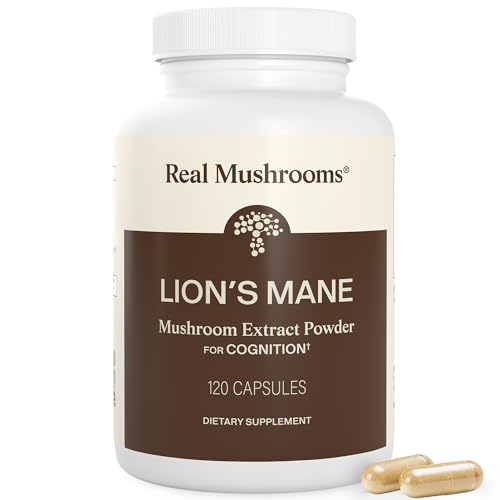
Our picks, all verified live on August 23, 2026: Real Mushrooms Lion's Mane capsules ($34.95 for 120) for a stated fruiting-body extract at more than 25% beta-glucans; Om Lion's Mane powder ($18.20) for a USDA Organic whole-food powder from a grower you can name; and Nootropics Depot 8:1 for maximum concentration. Whatever you choose, it is a dietary supplement that has not been evaluated by the FDA and is not intended to diagnose, treat, cure, or prevent any disease; the NGF mechanism behind the interest is preclinical research, not proven human outcomes.
Related decisions: powder vs capsules if the question is format, water vs dual extract if the question is extraction method, and the extract ratio guide for what 8:1 actually means.
Key terms
- Extract
- Mushroom material concentrated by hot-water (and sometimes alcohol) extraction, then dried. Good brands state the result as a beta-glucan percentage.
- Whole-mushroom powder
- The dried mushroom milled fine with no extraction step. Everything is present, nothing is concentrated, and a beta-glucan percentage is rarely stated.
- Beta-glucans
- The measurable polysaccharide fraction of a mushroom product; 20 to 30% or more in a real fruiting-body extract. The number that turns weight into dose.
- Chitin
- The tough material of fungal cell walls, poorly broken down by human digestion. Extraction does that work; whole powder leaves it to your gut.
- Extract ratio
- How many grams of raw mushroom went into one gram of extract, as in 8:1. A concentration statement, not a potency guarantee; the beta-glucan percentage is the better figure.
Our top-rated lion's mane
Whatever you decide, these are the lion's mane picks our reviews keep ranking on top. Live price check on each.



As an Amazon Associate we may earn from qualifying purchases, at no cost to you. 21+.
Questions, answered
Is lion's mane extract better than powder?
For a measured dose, yes: an extract concentrates the beta-glucans and a good brand states the percentage, so you know what a capsule delivers. Whole-mushroom powder is not worse, just different; the original Japanese trials used it at about 3 grams a day. It is the better buy for a cheap daily scoop if you dose by the gram.
How much lion's mane powder equals an extract capsule?
There is no exact conversion because powders rarely state a beta-glucan percentage. As a rule of thumb from the trials, about 3 grams a day of whole fruiting-body powder sits in the same evidence band as roughly 1 gram a day of extract. An 8:1 extract is, by definition, made from eight times its weight in raw mushroom.
Is lion's mane powder an extract?
Sometimes. Powder describes the format, not the processing. Real Mushrooms sells an extract as a powder; Om sells a whole-food powder that is not extracted. Read the label for the words extract, hot-water, or a beta-glucan percentage; if none appear, assume it is whole mushroom or mycelium.
Which is cheaper, lion's mane extract or powder?
Powder per gram; closer to even per day, because you take about three times as much. On August 23, 2026 Om's whole-food powder was $18.20 and Real Mushrooms' 120 extract capsules $34.95; at study-style doses the powder lasts about a month and the capsules about two.
What is the best lion's mane extract?
Real Mushrooms for a stated fruiting-body extract with published COAs at a fair price, and Nootropics Depot's 8:1 dual extract for maximum concentration. Both were verified live on August 23, 2026. Our dual-extract ranking covers the full field.
Does the form change safety?
Not meaningfully. Lion's mane was well tolerated in the published trials in both forms, with mild digestive upset the most common complaint. Skip it if allergic to mushrooms and check with a clinician if pregnant, breastfeeding, on medication, or managing a condition. These statements have not been evaluated by the FDA; no lion's mane product is intended to diagnose, treat, cure, or prevent any disease.
Filed under Explainer
Part of Lion's Mane 101
Sources
- Mori K, et al. Improving effects of the mushroom Yamabushitake (Hericium erinaceus) on mild cognitive impairment: a double-blind placebo-controlled clinical trial. Phytother Res. 2009;23(3):367-372. — 3 g/day fruiting-body powder, 16 weeks, n=30
- Nagano M, et al. Reduction of depression and anxiety by 4 weeks Hericium erinaceus intake. Biomed Res. 2010;31(4):231-237. — fruiting-body powder in cookies, 4 weeks, n=30
- Saitsu Y, et al. Improvement of cognitive functions by oral intake of Hericium erinaceus. Biomed Res. 2019;40(4):125-131. — 3.2 g/day fruiting body, 12 weeks, n=31
- Li IC, et al. Prevention of early Alzheimer's disease by erinacine A-enriched Hericium erinaceus mycelia: pilot double-blind placebo-controlled study. Front Aging Neurosci. 2020;12:155. — 3 x 350 mg/day enriched mycelia, 49 weeks, n=49
- Docherty S, Doughty FL, Smith EF. The acute and chronic effects of lion's mane mushroom supplementation on cognitive function, stress and mood in young adults: a double-blind, parallel groups, pilot study. Nutrients. 2023;15(22):4842. — 1.8 g/day, 28 days, n=41
- La Monica MB, et al. Acute effects of naturally occurring guayusa tea and Nordic lion's mane extracts on cognitive performance. Nutrients. 2023;15(24):5018. — single 1 g extract dose, crossover
- Friedman M. Chemistry, nutrition, and health-promoting properties of Hericium erinaceus (lion's mane) mushroom fruiting bodies and mycelia and their bioactive compounds. J Agric Food Chem. 2015;63(32):7108-7123. — review of composition and polysaccharides
General information, not medical advice. Lion's mane is a dietary supplement; these statements have not been evaluated by the FDA. Talk to a clinician before starting any supplement if you are pregnant, breastfeeding, on medication, or managing a condition.
Ready to try one? Start with our top picks
Whatever you decide, these are the lion's mane picks our reviews keep ranking on top. Live price check on each.
As an Amazon Associate we may earn from qualifying purchases, at no cost to you. 21+.
Keep reading
Lion's Mane Powder vs Capsules
The format question, once you have settled extract or whole.
Water vs Dual Extract
The extraction-method question.
Lion's Mane Extract Ratio Explained
What 8:1 means and what it does not.
Lion's Mane Dosage: How Much to Take
The full study table by format.
The Best Lion's Mane Extract (2026)
Verified extract picks ranked on stated beta-glucans.
The Best Lion's Mane Powder (2026)
Powders ranked, extract and whole food.